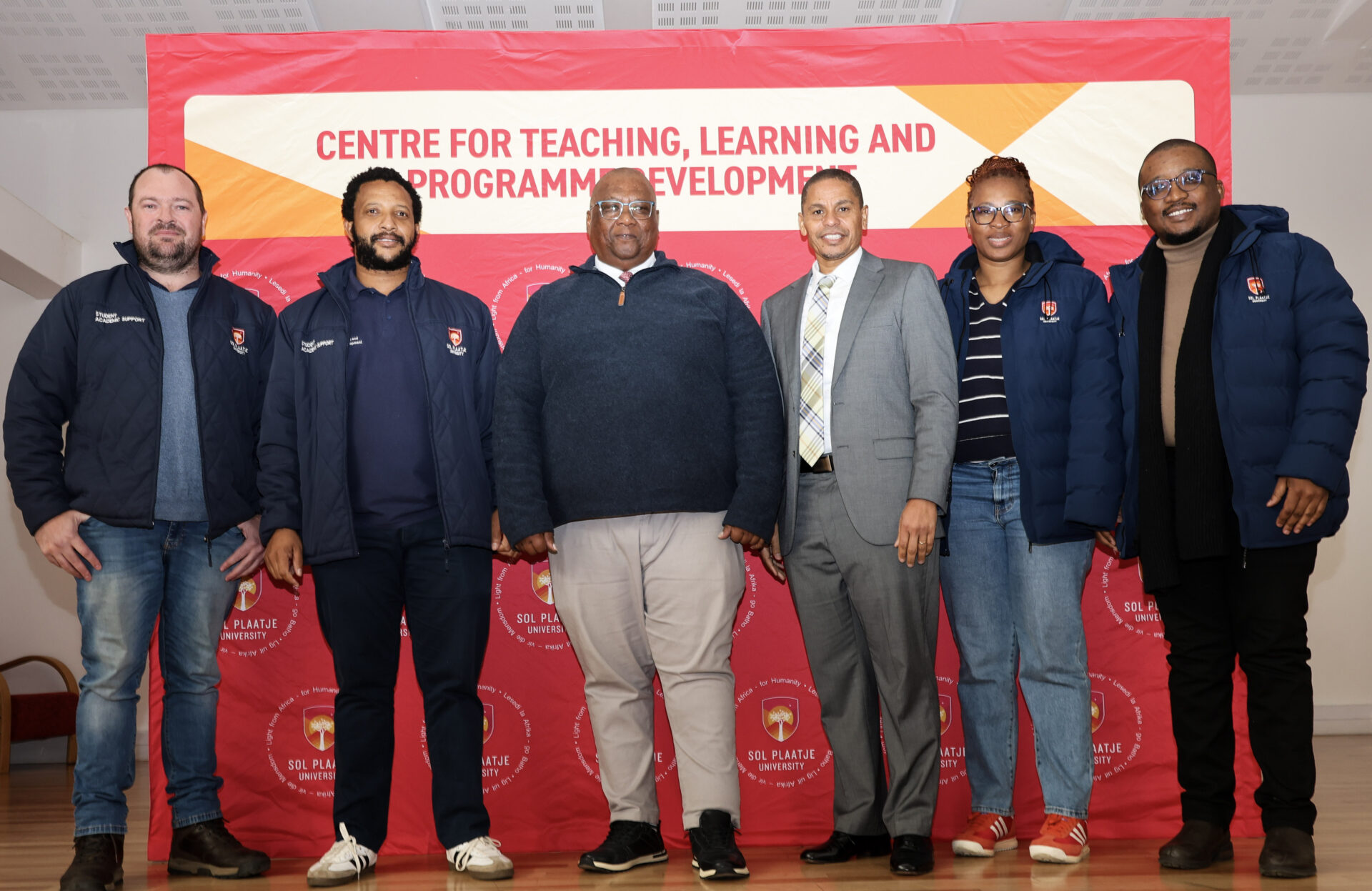
Sol Plaatje University (SPU) hosted its inaugural Digital Learning & Innovation Day on Friday, 10 July 2026, bringing academic staff together to reflect on innovation, digital pedagogy and the future of teaching and learning at the University.
Hosted by the Centre for Teaching, Learning and Programme Development through its E-Learning and Curriculum Design Unit, the event ran under the theme Innovation in Digital Learning and Teaching. It gave academics an institutional platform to showcase technology-enhanced teaching, share practical approaches to digital learning and strengthen collaboration across faculties.
Opening the day, Mr Godfrey Rudolph, Manager of the E-Learning and Curriculum Design Unit, said the gathering was an opportunity to recognise academics who continue to enhance teaching and learning through innovation, reflection and collaboration, noting that digital technologies, used thoughtfully, can enrich learning, deepen engagement and support new approaches to teaching and assessment.
Delivering the strategic address, the Deputy Vice-Chancellor: Teaching and Learning, Prof Paul Green, described the day as an institutional milestone. SPU’s aspiration to become a digitally advanced university, he said, must be visible in the core academic work of teaching and learning. Meaningful digital transformation is not simply about adopting technology; it requires the reimagining of teaching practice, stronger academic collaboration and a sustained commitment to student success. He cautioned that innovation must remain inclusive, with the University mindful of students who need additional support because of unequal access to devices, data, connectivity and digital skills.
The keynote was delivered by Dr Lebohang Mahlo of the Faculty of Education, who reflected on digital learning within the realities of the Northern Cape. Drawing on a recent 10-day, 1 700-kilometre outreach initiative across the province, he described training in-service teachers to use digital tools, open educational resources and artificial intelligence in their teaching. His address called for digital learning approaches that respond to local realities, including rurality, limited connectivity and resource constraints, and foregrounded the ethical use of artificial intelligence, including honesty, human oversight, privacy protection and fairness in teaching and assessment.
Throughout the day, academics from across the faculties shared practical examples of digital tools in action: Moodle and Inspera to improve assessment, Panopto for recorded lectures and revision, virtual reality and artificial intelligence in science education, and teleprompter technology for legal sight interpreting through the utilisation of the digital learning and innovation studios in the E-Learning Unit. The E-Learning and Curriculum Design team demonstrated active learning approaches, multimedia resources, course design and engagement tools within Moodle, showing how digital platforms can move beyond content storage to become spaces for structured, accessible and engaging learning.
A faculty panel discussion gave academics further space to reflect on digital teaching within their disciplines, touching on large classes, resource constraints, open educational resources, student digital readiness and the scholarship of teaching and learning.
Closing the day, the Director of the Centre for Teaching, Learning and Programme Development, Dr Severino Machingambi, said the event demonstrated how digital pedagogy can support epistemological access by helping students engage meaningfully in the knowledge production process. Knowledge gains value when it is shared, he said, and the day contributed to a collective pool of institutional knowledge that can strengthen teaching and learning at SPU.
The Centre intends the event to become an annual feature on the University calendar, with the long-term aim of growing it into a broader teaching with technology summit.
