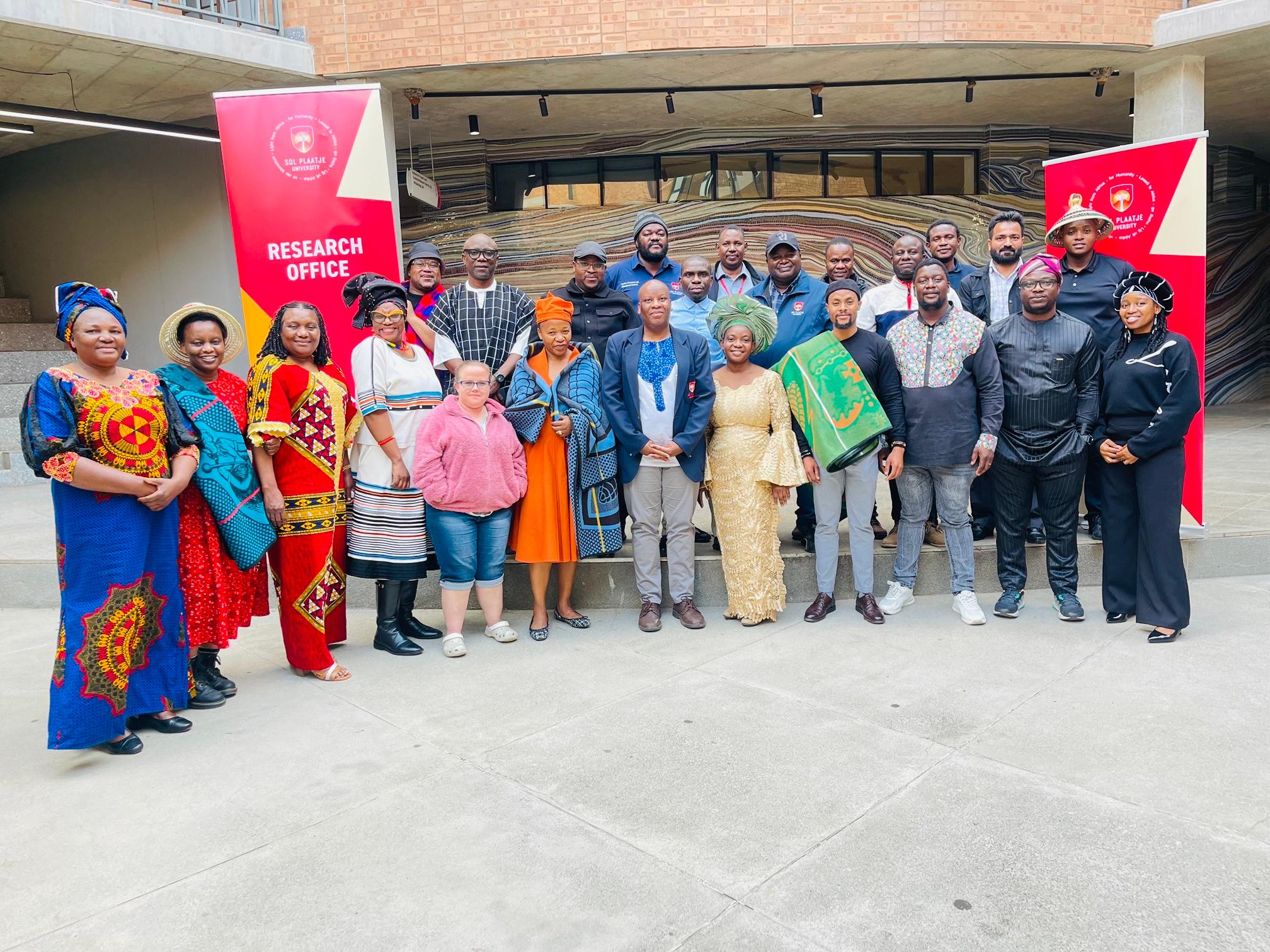
Sol Plaatje University’s Research Office recently held its annual Postdoctoral Fellowship Day, bringing together postdoctoral fellows, academics, and support divisions to celebrate diversity, African heritage, and mutual learning. This engagement was held to connect postdoc fellows with the support divisions that handle the institution’s administrative processes, and to revive their relationship with the research office that hosts them. Most importantly, it aimed to help them get to know one another and share their culture through a traditional food exhibition.
Beyond networking, information sharing, and cultural exchange, the engagement demonstrated how Internationalisation can be experienced at home. Bringing together post-doctoral fellows, academics, and support divisions from different cultural and linguistic backgrounds attests to SPU’s emphasis on fostering multilingualism. Through this engagement, participants shared experiences and formed collaborations, attesting that cultural diversity and tolerance can be achieved through knowledge sharing. Indeed, this engagement created opportunities for intercultural exchange without crossing borders.
SPU values the well-being of its employees and, as part of capacitating its research fellows with the knowledge, resources, and information they need. Dr. Tolulope Olatoye took to the stage to share his reflection on his postdoctoral journey and how he transformed from doing research and building a unique research identity. His reflection was to share with newly appointed Postdoctoral fellows what their journey at SPU is likely to be, of course, varying with their designations and research fields. In his presentation, he shared the importance of interdisciplinary collaboration, networking, valuing social impact, and, most importantly, conducting research that addresses global challenges. “It is Important to develop a niche and build meaningful networks and, most importantly, conduct research that will make a difference beyond academia,” he said.
Celebrating heritage through knowledge sharing
The discussions on the engagement also emphasised decoloniality in research. Dr. Olatoye emphasised the importance of indigenous knowledge systems, oral histories, multilingualism, and African ways of knowing. His submission was that scholarship can draw on African perspectives, strengthen research relevance, and create more inclusive and socially responsive knowledge creation.
As part of capacity building, Prof Raymond Fru of the faculty of Education shared lessons on what makes a successful postdoctoral fellowship through the lens of a supervisor. He also shed light on potential challenges in the research fellowship journey and available opportunities at SPU. Additionally, the support divisions from Finance, Human Resources, CTLPD, Research Office, and Library Services shared the support services available to postdoctoral fellows, reaffirming their commitment to the new postdoctoral fellows. The key highlight of the engagement was the traditional food exhibition, where postdoctoral fellows shared their pride in traditional dishes from their respective cultures. Indeed, this engagement reminded participants that SPU should be perceived not only as a workplace but also as an institution that unites people from diverse backgrounds, nationalities, and fields.
Rooted in Africa, Connected to the world
The postdoctoral fellowship engagement Day reflected SPU’s vision of being a university rooted in Africa while connected to the world. This heritage celebration encouraged inclusion, diversity, and collaboration, which could strengthen the scholarly network. Largely, the event showcased the power of unity in advancing research and knowledge production; it also demonstrated that Internationalisation at home is not merely a strategy but a lived experience that fosters mutual understanding, respect, and collective growth within the university community.
