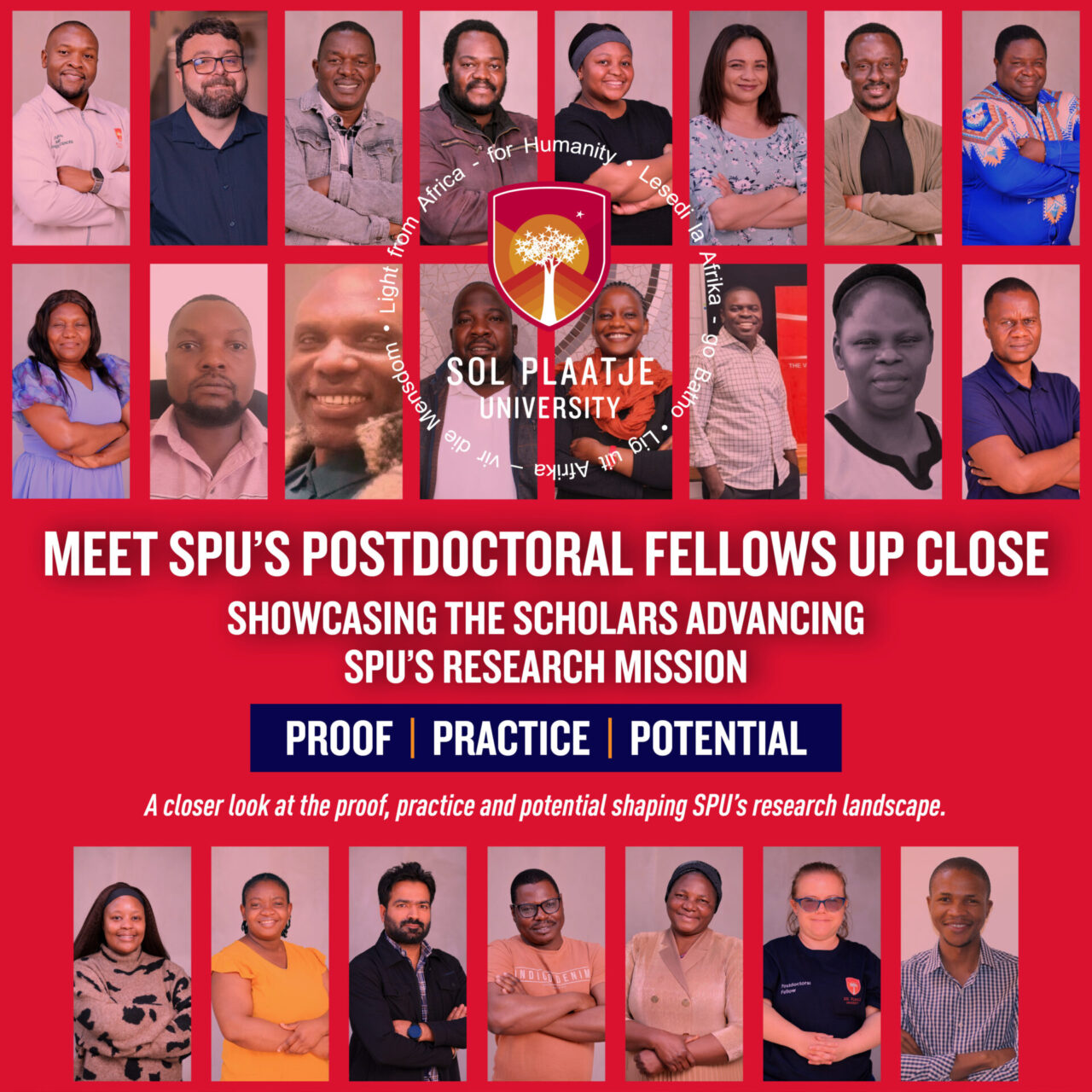
We are pleased to introduce Postdoctoral Fellows Up Close, a short feature series that brings you closer to the scholars who are shaping SPU’s growing research identity. Postdoctoral Fellows are an essential part of our academic enterprise. Their work strengthens knowledge production, supports postgraduate development and contributes to the University’s mission of generating research that serves society.
This series offers a closer look at the scholars behind the research. Each fellow brings a distinct perspective to their field, reflecting SPU’s commitment to inquiry that is relevant, rigorous and responsive to regional, national and global questions.
Among the scholars we introduce today are:
- an economist examining how investment flows influence development and institutional strength
- a data scientist advancing artificial intelligence and machine learning applications across education, health, agriculture and environmental systems
- a teacher education scholar exploring equity, professional identity and the experiences of new teachers in Southern Africa
- a historian and heritage studies researcher whose work examines memory, identity and cultural narratives through archives and visual culture
Each profile invites you to discover how these scholars are contributing to SPU’s research vision and to the broader academic community. Today we begin by sharing their work as part of our Postdoctoral Fellows Up Close feature.
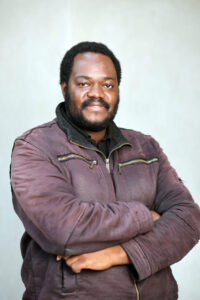
Dr Darlington Chizema, an economist and researcher in the Department of Accounting and Economics, under the Faculty of Economic and Management Sciences explores how Foreign Direct Investment (FDI) fuels economic development across Africa and Asia, particularly by raising productivity and strengthening institutions. His research studies both the drivers and impacts of FDI with a strong interest in how governance, ease of doing business, and human capital interact with investment to support sustainable growth. Dr Chizema argues that “many developing economies face capital shortages, weak institutional frameworks, and low productivity. Well directed FDI, when supported by robust institutions, has the potential to close investment gaps, facilitate technology transfer, and drive structural transformation.”
In the field of Data Science, Dr Julius Olaniyan, under the Center for Applied Data Science, in the Faculty of Natural and Applied Sciences, conducts work that spans advanced Artificial Intelligence and Machine Learning applications across education, healthcare, agriculture, cybersecurity, and environmental systems. His research includes AI-driven adaptive learning models, neuro biophysical and graph based deep learning for medical diagnosis, automated assessment systems, generative data augmentation, and intelligent forecasting frameworks. He has developed multiple prototype AI systems and contributes to interdisciplinary, simulation driven research aimed at addressing complex societal challenges. Dr Olaniyan is also committed to academic mentorship, teaching key concepts in deep learning, artificial neural networks, and data science.

Teacher Education development in the Faculty of Education is enriched by Dr Nyarayi Chinyama, a scholar in Education and Sociology with a strong research focus on social justice, teacher professional development, well being and higher education transformation. Dr Chinyama holds a PhD in Education from the University of Fort Hare and has an extensive background in teaching, curriculum studies and educational policy analysis. Her academic work critically engages with issues surrounding beginner teacher preparedness, mentorship, inclusive education and the professional socialisation of newly qualified teachers, particularly within the Southern African context. Her scholarship is grounded in critical and interdisciplinary theoretical frameworks, drawing from sociology, education and social policy to interrogate issues of equity, belonging and institutional support. Passionate about transformative education and social change, she continues to publish and develop research that bridges academic theory with lived realities in Southern Africa and beyond accredited journals.
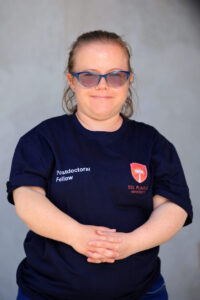
Dr Domonique-Marie Verkerk currently serving under the Faculty of Humanities, brings a wealth of more than 14 years experience in the fields of History, Heritage Studies and Archaeology, specialising in the South African War, concentration camps, Afrikaner nationalism and cultural identity. Her interdisciplinary work integrates history, archaeology, museology and Afrikaans film studies to examine how visual culture and heritage shape narratives of nationhood, drawing on extensive practical experience in curation and curriculum development. Dr Verkerk has published numerous articles and a book chapter in peer reviewed edited volumes and journals and is an active member of the Historical Association of South Africa (HASA) and is committed to advancing decolonial perspectives in history, heritage and pedagogy.
Together, these Postdoctoral Fellows represent the depth, diversity, and growing impact of research at SPU. Their work enriches our academic environment, strengthens community engagement, and contributes to national and global conversations in their respective fields. As the University continues to expand its research footprint, we remain committed to supporting emerging scholars whose work shapes communities, informs policy, and drives innovation.
